Give each connected location a clear operational purpose
Shopify locations can represent stores, warehouses, stockrooms, or other places that stock or fulfill products. Snap Retail Metrics reads the connected location list and lets the account owner classify which locations represent physical selling activity and which locations should participate in online order-picking workflows.
Physical selling locations
Use physical-store classifications to keep location sales views aligned with places where customers pay and take products with them. Sales dashboards can compare available net sales, orders, pieces sold, and average order value by connected location for supported date ranges.
Online fulfillment locations
Choose which connected locations should surface eligible orders for picking. This keeps the Snap Retail Metrics work queue focused on the stores, warehouses, or stockrooms that actually prepare online orders.
Inventory visibility across locations
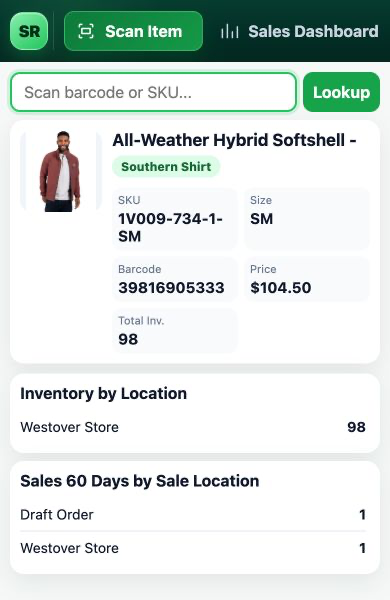
When an employee scans a matching product, Snap Retail Metrics can display available inventory from connected Shopify locations in one view. Shopify remains the source of the quantities and location definitions.
An operational preference, not a routing replacement
Location classifications in Snap Retail Metrics control what its users see and which workflows it presents. They do not replace Shopify location configuration, order-routing rules, inventory allocation, or fulfillment services.